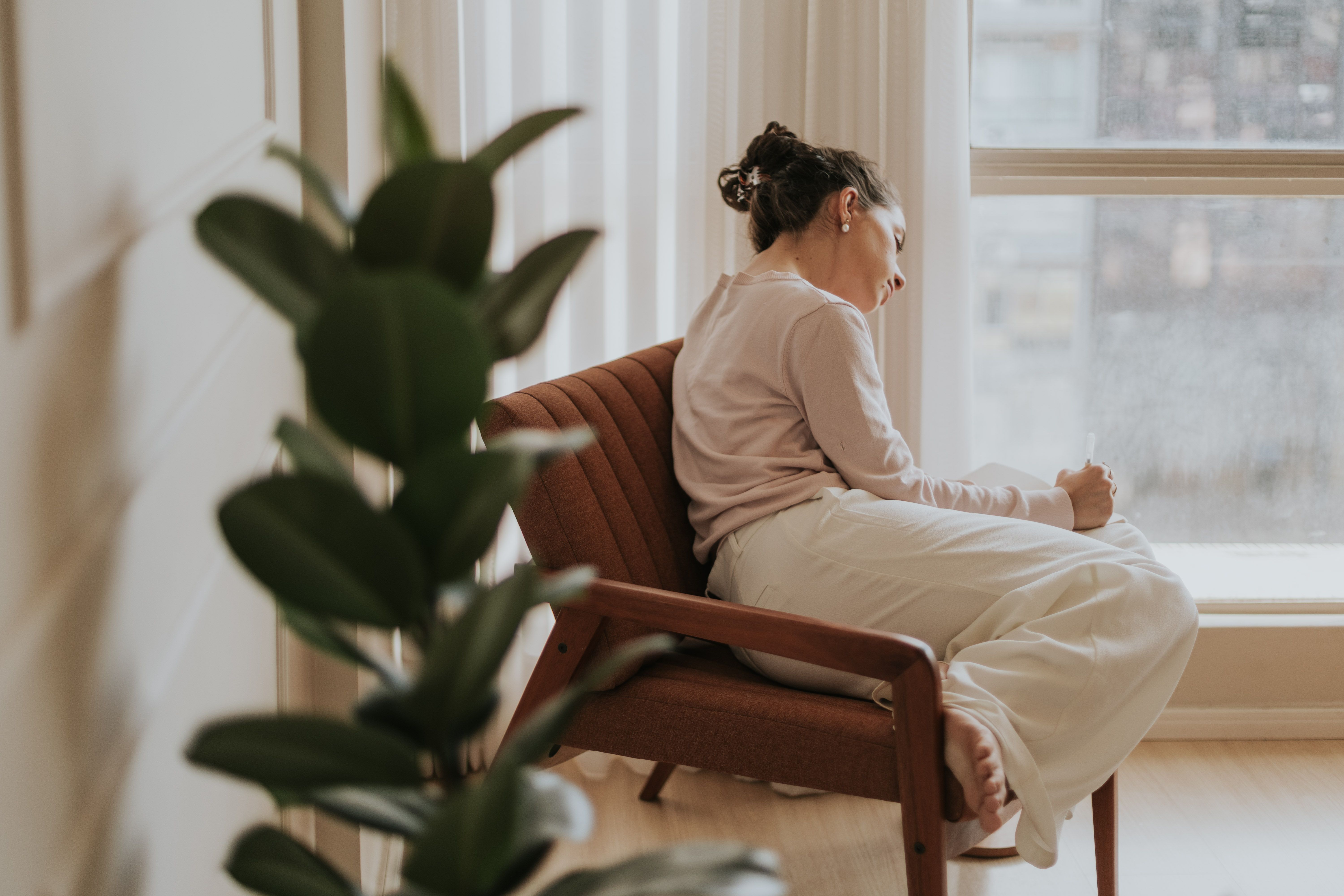

Before most people ask me about art therapy, there is usually a moment of hesitation.
A slight pause. A qualifier. Sometimes an apology.
One of the questions I am asked most often — by new clients, friends, family members, and even colleagues — is about art therapy. More specifically, it usually sounds something like this:
"I am not an artist."
"I am not creative."
"I would be embarrassed."
There is often an unspoken belief underneath those statements: that art therapy is for people who know how to draw, paint, or create something "good." That you need talent, confidence, or a creative identity to belong in that space.
Here is the gentle truth: art therapy has very little to do with being an artist.
And if I am being completely honest, even as a registered art therapist, that same voice still pops up for me sometimes too. I love art. I love creating. I love working with images, colour, texture, and materials. Do I consider myself an artist? In some ways, yes. In the traditional sense — the gallery, the title, the polished outcome — not really. And that distinction matters. Because art, at its core, is not about performance. It is about expression.
Many people carry experiences from childhood or school that taught them art was something you were either good at or not. Maybe you were praised for staying inside the lines — or quietly discouraged when you did not. Over time, creativity became something measured, judged, or compared.
So when people imagine art therapy, it makes sense that embarrassment or hesitation shows up. There is a fear of doing it wrong. Of being seen. Of not knowing what to do.
But art therapy is not about creating something to be evaluated. It is about using the creative process as a way to communicate — especially when words are not quite enough.
What I have come to land on over time is this: art is everywhere. It is how we express ourselves in conversation. It is how we problem-solve, plan, and imagine. It is how we connect, adapt, and respond to the world around us. I wrote about this idea a little differently in How Finding Moments of Magic in Everyday Life Can Nurture Your Mental Health — the way small, creative moments can reconnect us to ourselves even outside of a formal therapeutic space.
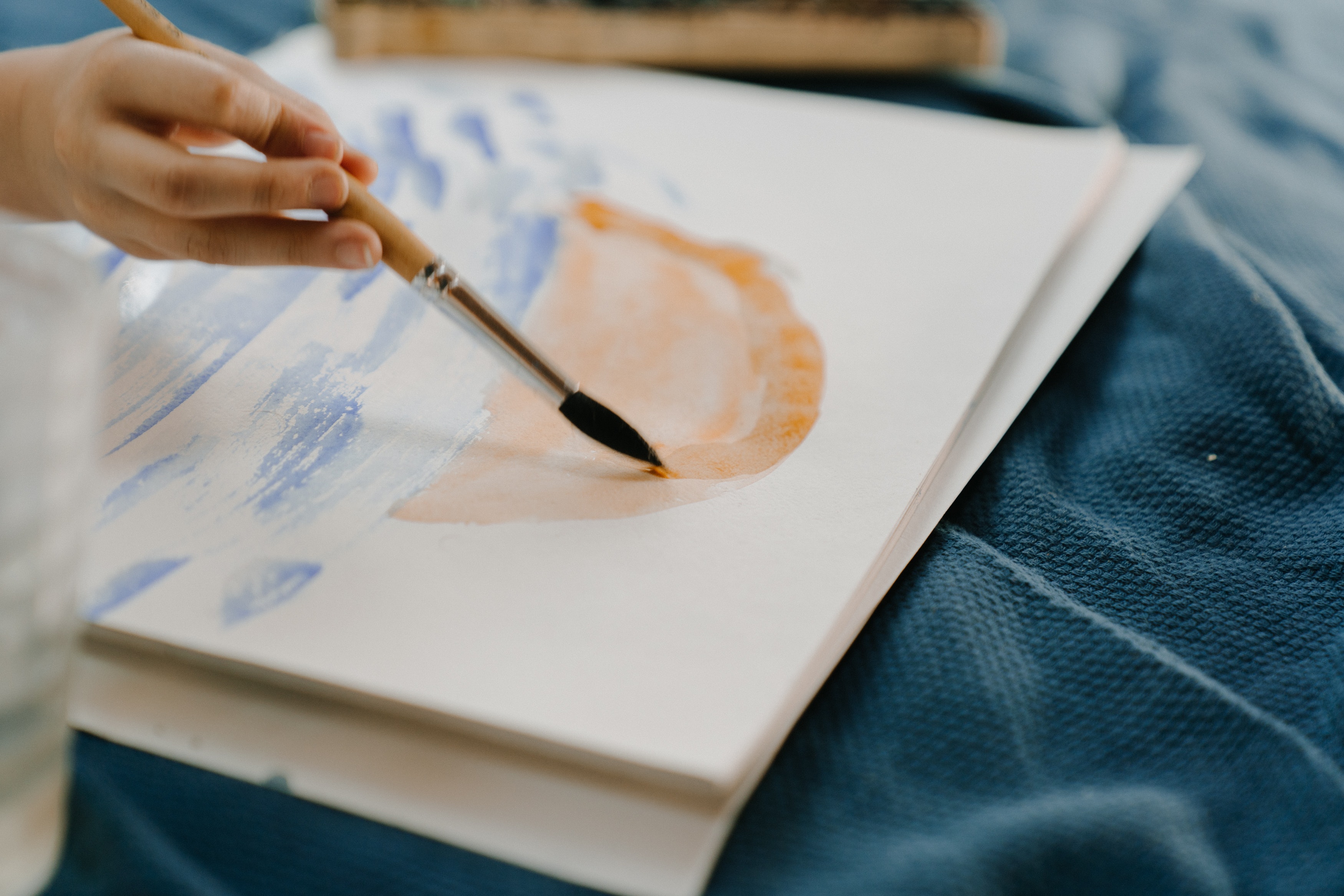
In therapy sessions, art might look like making marks on a page, sensory touching of materials, noticing colour choices, or simply sitting with materials and seeing what emerges. It can be subtle. It can be messy. It can be quiet. There is no expectation to "be good at it."
What often surprises people is that letting yourself be free creatively takes time. It is a practice, not a switch you flip. As an art therapist, I am constantly moving between creating, reflecting, rebuilding, and recalibrating. The same is true for clients. Creativity — especially when it has been shut down or judged in the past — needs patience and gentleness.
Art therapy is not about forcing expression. It is about creating enough safety for expression to happen naturally, in its own time.
In my work, art therapy does not exist in isolation. It is woven into counselling and somatic-based therapy in a way that supports the whole person. There is still talking. There is still reflection. There is still attention to the body, sensations, and emotions. Art becomes one of many ways to explore what is happening inside — especially when words feel limiting or overwhelming.
You do not need a creative identity to belong in that space. You do not need experience, or confidence, or any sense of what you are doing. You only need a little curiosity — and permission to show up as you are.
If art therapy has ever felt intriguing but a little out of reach, I want you to know: that hesitation makes complete sense. Most of us were taught, somewhere along the way, that creativity belongs to certain people. That you have to earn your place at the table with talent or training.
But in my experience — both as a person who creates and as a therapist who works alongside people in that process — the most meaningful moments rarely happen because someone knew what they were doing. They happen because someone was willing to begin.
Art therapy is not about being an artist. It is about being human. And sometimes, that is exactly where something important starts to move.
If you are curious about what this work might feel like, you can learn more about counselling at Soul Flow Therapy or book a free 20-minute phone consultation. Counselling sessions are available in person in Port Moody and online across BC.
This post is for reflection and educational purposes. It is not a substitute for individual counselling, diagnosis, or medical advice.
%20(Square%20Cards).avif)